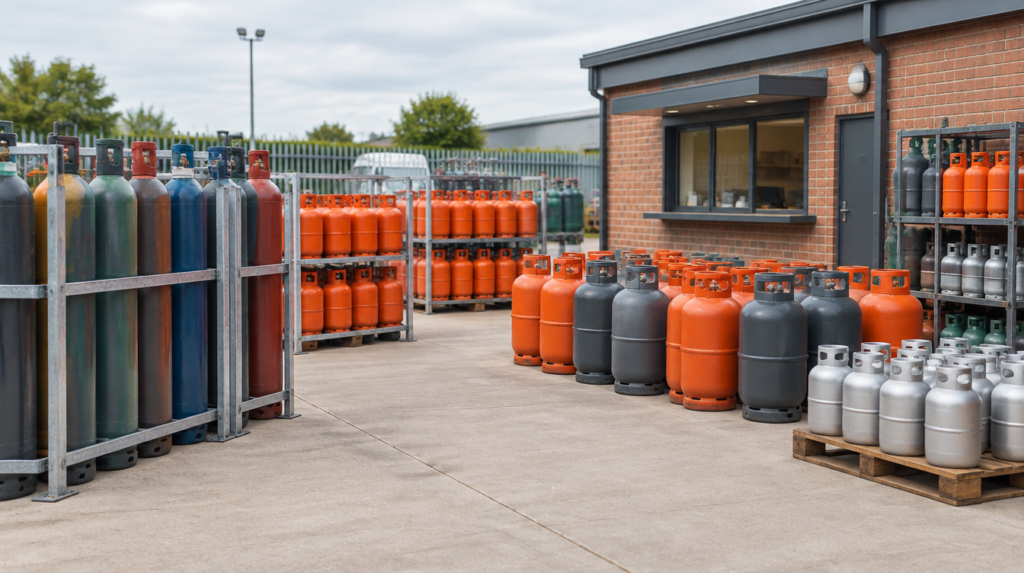
For decades, oxy-acetylene was the default for cutting, heating and brazing. But more workshops are switching their fuel gas to propane or propylene, paired with oxygen, and asking a sensible question first: will it do the job, and what kit do I need to change? This guide gives you a straight answer, a side-by-side comparison, and the exact equipment to make the switch — with everything available from Adams Gas, refill or exchange, with no cylinder rental.
Acetylene vs propane vs propylene — at a glance
All three are fuel gases burned with oxygen. The difference is flame chemistry, running cost and handling.
| Acetylene | Propane | Propylene | |
|---|---|---|---|
| Flame heat | Hottest — fast, localised heat | Coolest of the three | Hotter than propane; closest to acetylene |
| Best for | Fusion welding steel, fast cutting, fine localised work | Cutting, heating, soldering, economical bulk work | Cutting, heating, brazing, lead work — an all-round substitute |
| Fusion welding steel | Yes | No | No |
| Running cost | Highest | Lowest | Low–mid |
| Storage & handling | Dissolved in acetone in a porous filler; pressure limits apply | LPG family — stable, easy to store and transport | LPG family — stable, easy to store and transport |
| Availability | Specialist supply | Very widely available | Widely available |
The headline trade-off: acetylene burns hottest, so it stays the choice for fusion welding mild steel and the fastest pre-heat. For almost everything else most workshops do day to day — cutting, heating, brazing, silver soldering and lead work — oxy-propane or oxy-propylene does the job at a lower running cost and with simpler cylinder handling. Propylene sits between the two: hotter than propane and the closest single substitute for acetylene on cutting and heating.
For the background theory, see our introduction to oxy-fuel and the deeper dive on the advantages of oxygen and propylene over oxygen and acetylene.
Which gas for which job?
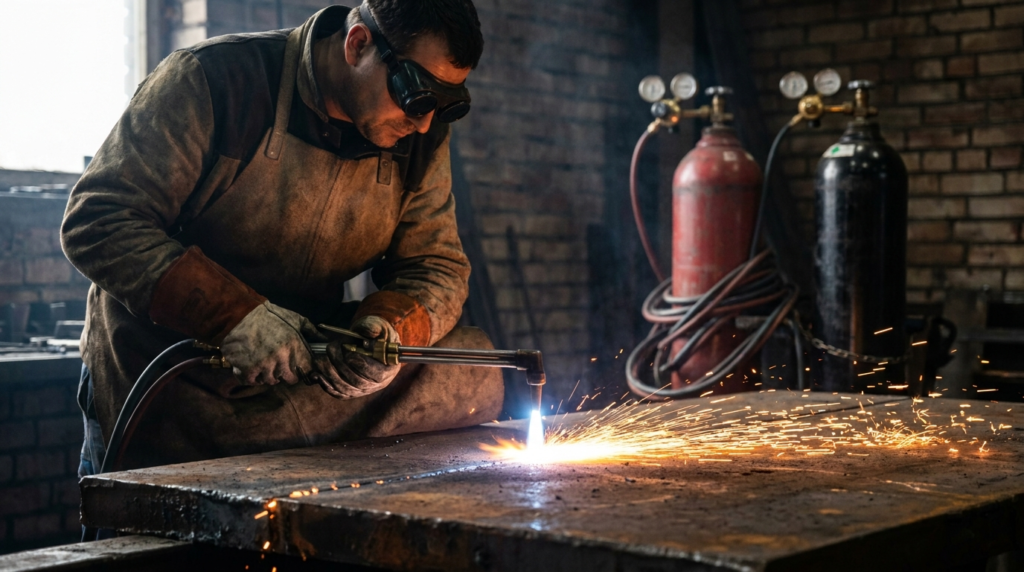
- Cutting steel — oxy-propane and oxy-propylene both cut cleanly with the right nozzle. Propylene reaches cutting temperature faster, which suits higher-throughput work; propane is the most economical for steady cutting.
- Heating, bending and loosening — propane and propylene both deliver broad, sustained heat efficiently, ideal for pre-heating, freeing seized parts and bending.
- Brazing and silver soldering — well within the capability of oxy-propane and oxy-propylene; propylene’s hotter flame helps on heavier sections.
- Lead work (plumbing, roofing) — an oxy-propane/propylene set is a popular, controllable choice.
- Fusion welding mild steel — this is the exception. Stick with acetylene, or move to MIG/TIG — see our MIG vs TIG welding gas guide and welding gas mixtures explained.
What you need to switch from acetylene
This is the part most “should I switch” articles skip. Because propane and propylene burn differently from acetylene, you can’t simply swap the bottle — you need fuel-gas-rated parts. The good news: propane and propylene share the same regulator and nozzle family, so one fuel-gas set covers both.
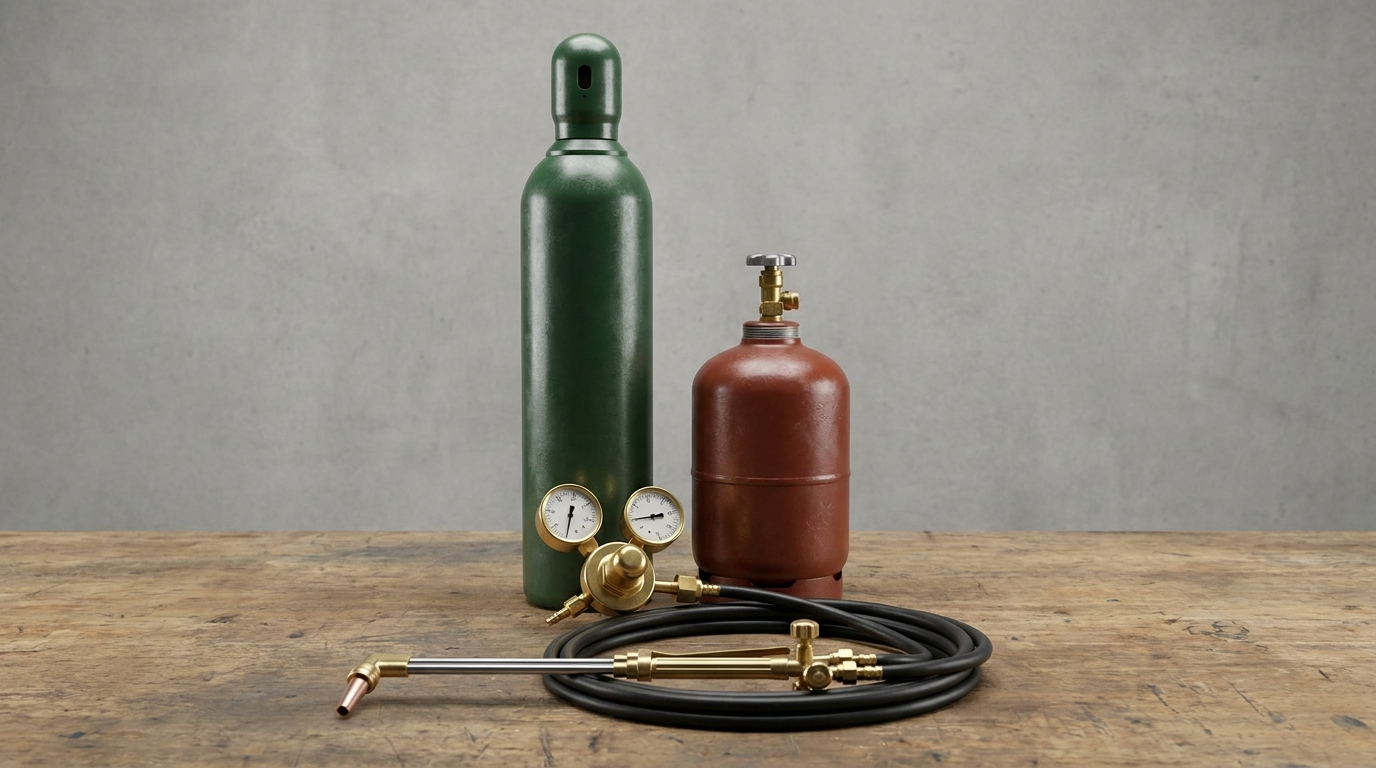
Oxy-propane / oxy-propylene kit checklist:
- A fuel-gas cylinder — propylene in 2L, 10L or 20L for heating, cutting and brazing — or propane.
- An oxygen cylinder — Adams Gas supplies oxygen for heating, cutting, brazing and lead welding from 10L up to 50L and 220L.
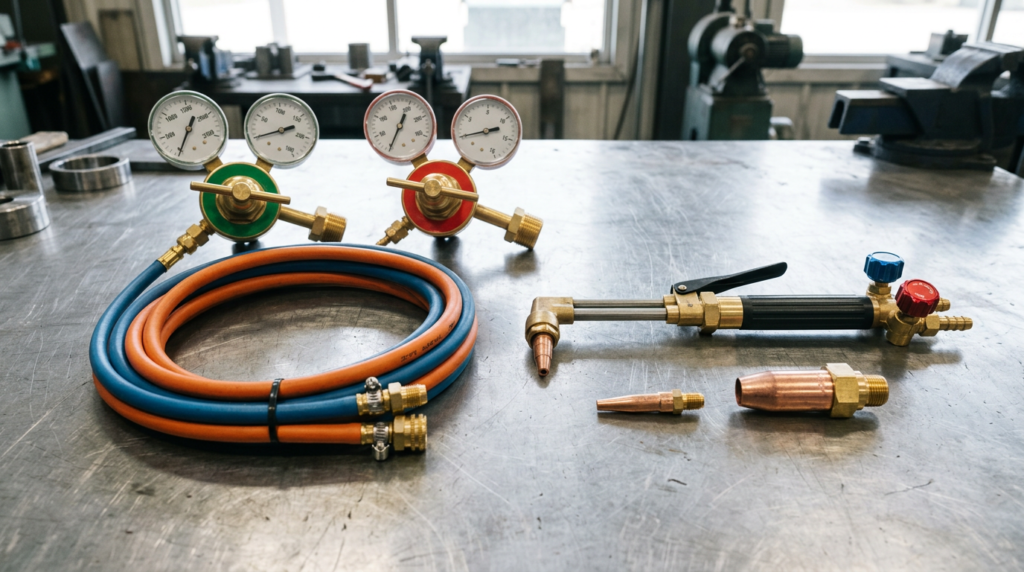
- A propane/propylene regulator — fuel-gas-specific, not the acetylene regulator. The Propane/Propylene Regulator with gauges is the right part.
- Propane/propylene cutting, heating and welding nozzles — sized to the gas. These come matched in our ready-made kits.
To take the guesswork out, Adams Gas offers complete sets: the Oxygen-Propylene Cutting Kit, the Oxygen-Propylene Heating Kit, and the Oxygen Propane/Propylene Lead Welding Kit. Browse the full range on our bottle gases page.
Using oxy-fuel safely
Oxy-fuel sets demand respect whatever the gas. Always use the correct fuel-gas regulator and nozzles, fit flashback arrestors, check hoses and connections for leaks, work in a ventilated space, keep cylinders upright and secured, and follow the safety information supplied with each cylinder. Our guide on staying safe when gas welding covers the essentials. If in any doubt about a setup, ask before you light up.
Supply without the rental trap
Switching fuel gas is also a chance to cut your overheads. Adams Gas runs on refill and exchange with rent-free cylinder options, so you pay for the gas — not a standing charge for holding the bottle. With UK delivery and a nationwide stockist network, a refill is rarely far away, whether you’re a single workshop or running multiple sites. We also supply welding gases across Kent and beyond.
If you’d like advice on the right oxy-propane or oxy-propylene setup for your work, contact the Adams Gas team. And if you run a trade counter or hire shop and want to stock fuel gases for your own customers, you can become an Adams Gas stockist.
Frequently asked questions
Can I use oxy-propane or oxy-propylene instead of oxy-acetylene?
Yes — for cutting, heating, brazing, silver soldering and lead work, oxy-propane and oxy-propylene are capable, lower-cost substitutes for oxy-acetylene. The main exception is fusion welding mild steel, where acetylene’s hotter flame still leads; for that work, acetylene or MIG/TIG remains the better choice.
What’s the difference between propane and propylene for cutting?
Propylene burns hotter than propane and reaches cutting temperature faster, so it’s the closer all-round substitute for acetylene on cutting and heating. Propane is the most economical option for steady cutting and general heating. Both run on the same fuel-gas regulator and nozzles.
Do I need a different regulator to switch from acetylene?
Yes. Acetylene uses its own regulator, so to run propane or propylene you need a fuel-gas regulator — for example the Adams Gas Propane/Propylene Regulator with gauges — plus nozzles sized for the gas. Propane and propylene share the same regulator and nozzle family, so one set covers both.
Is propylene safer to store than acetylene?
Propane and propylene are LPG-family gases that are stable to store and transport in upright cylinders. Acetylene is dissolved in acetone within a porous filler and has its own handling rules. Whatever the gas, fit flashback arrestors, check for leaks, ventilate the area and follow the safety information supplied with your cylinder.
Where can I buy oxy-propane and oxy-propylene gas and kits?
Adams Gas supplies propylene and oxygen cylinders, fuel-gas regulators, and complete oxy-propane/propylene cutting, heating and lead-welding kits — with UK delivery, refill and exchange, rent-free options, and a nationwide stockist network for local supply.
Ready to switch? Compare propylene and oxygen cylinders, pick a ready-made cutting or heating kit, find your nearest stockist, or contact the team for trade supply.
Related: once you have chosen your fuel gas, see which oxy-propane torch and lead welding kit you actually need for a job-by-job kit guide.