If you weld only now and then — a workshop repair, a trailer, a gate, a bit of fabrication — you don’t want to sign a cylinder rental contract and pay a standing charge every month for gas you use in bursts. That’s exactly where a disposable welding gas cylinder earns its place: buy it, use it, replace it, with no rental and no deposit. This guide explains which gas goes with which job, how to pick the right size, and — importantly — when it pays to step up from a disposable to a rent-free refillable bottle instead.
Which welding gas do you actually need?
Shielding gas keeps the air away from your weld pool so the joint stays clean and strong. The right gas depends on your process and the metal:
| Gas | Best for | Notes |
|---|---|---|
| Argon-CO₂ mix | MIG welding mild and carbon steel | The everyday all-rounder — a stable arc, a tidy bead and low spatter. The most popular choice for general steel MIG. |
| Pure CO₂ | MIG welding steel on a budget / thicker sections | Deeper penetration and lower gas cost, but more spatter than a mix. A sound choice for heavier steel and value-focused work. |
| Pure Argon | TIG welding (all metals) and MIG on aluminium | Essential for TIG and for non-ferrous MIG. Don’t use pure argon for MIG on steel — the arc suffers. |
As a rule of thumb: steel MIG → argon-CO₂ mix; budget or thick steel MIG → pure CO₂; TIG or aluminium → pure argon. If you’re weighing up the two processes first, our guides on MIG vs TIG welding gas and welding gas mixtures explained go a level deeper. Adams Gas stocks all three as disposables: argon-CO₂, pure argon and pure CO₂, plus dedicated TIG welding gas.
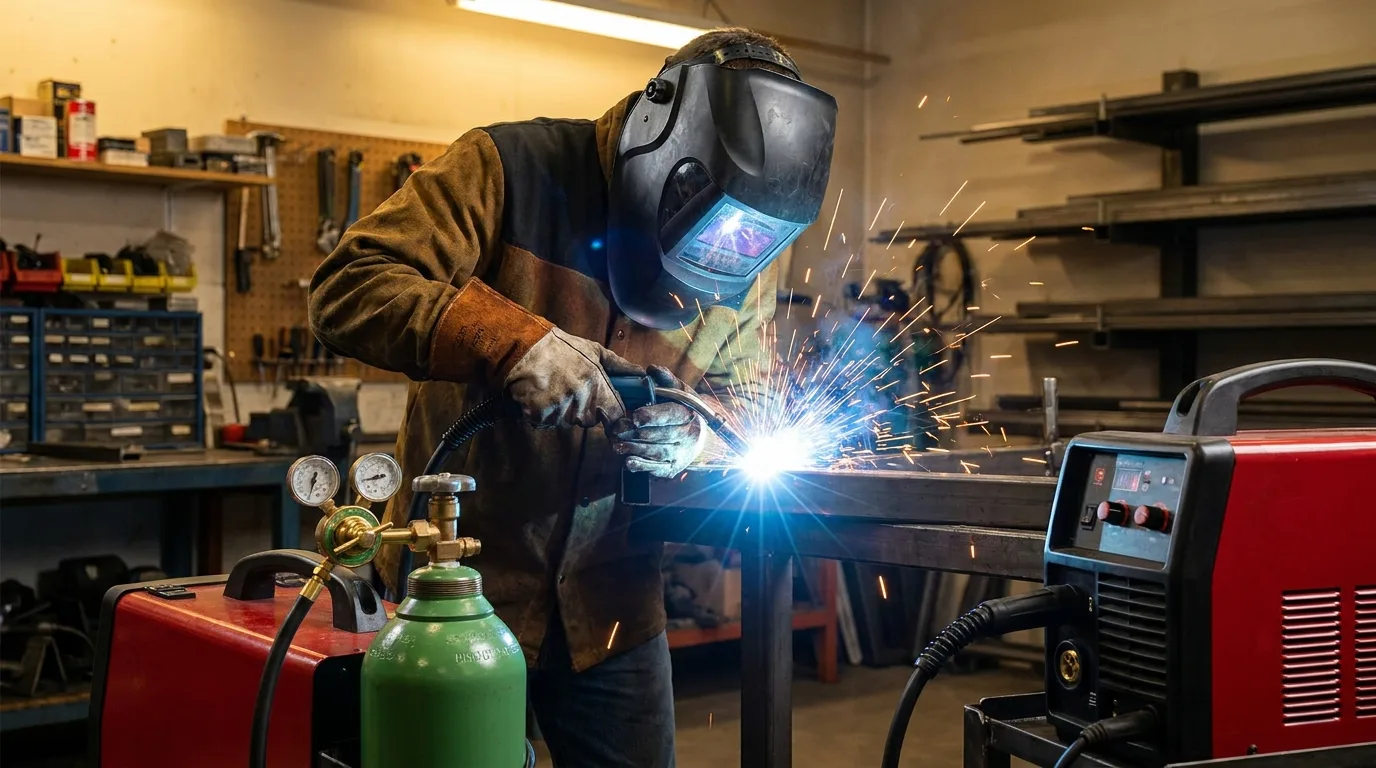
What size cylinder — and how the sizes work
Adams Gas supplies disposable welding gas cylinders in two handy sizes, both on the common M10 × 1 RH thread so they pair with a standard disposable regulator:
- 0.95L — the compact bottle. Light, portable and ideal for occasional jobs, mobile work and tight spaces. Available as argon-CO₂ for MIG, pure argon for TIG & MIG, and pure CO₂ for MIG.
- 2.2L (around 220 litres of gas) — the bigger disposable, so fewer changeovers on a longer session. Available as argon-CO₂ for MIG, pure argon for TIG & MIG, and pure CO₂ for MIG.
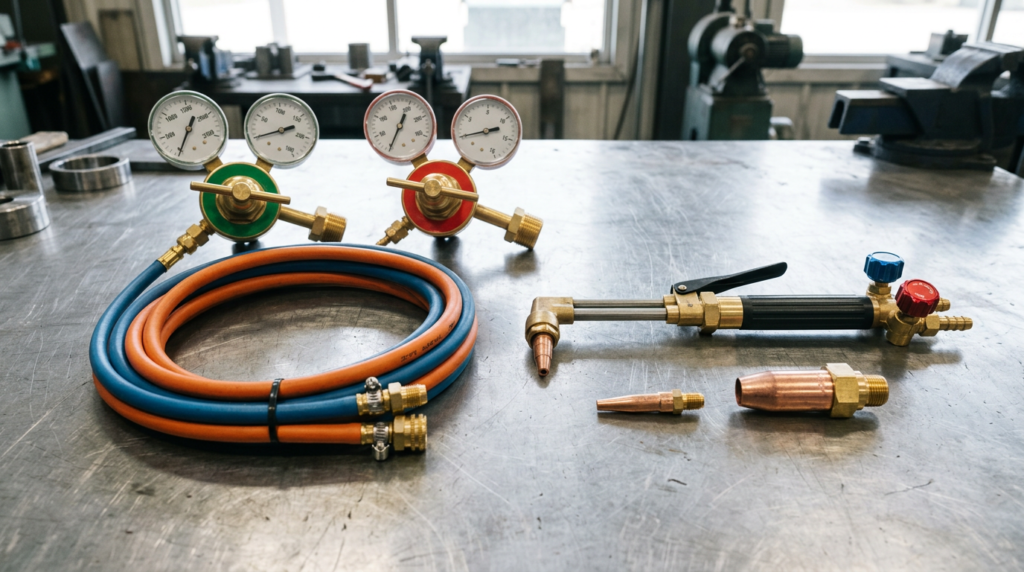
How long a cylinder lasts depends on your gas flow rate, how much you weld and how draughty your space is — so treat the 2.2L as the choice for longer runs and the 0.95L as the grab-and-go option. You’ll also need the matching MIG welding regulator and fittings to control the flow.
Disposable vs refillable: which is right for you?
This is the decision most guides skip. Both have their place — it comes down to how much you weld.
- Choose disposable if you weld occasionally, work on the move, or want zero commitment: no rental, no deposit, no contract. Pay for the cylinder, use it, replace it. Perfect for hobbyists, small workshops and anyone who values simplicity — browse the full range of disposable welding gas cylinders and our hobby & disposable MIG gas options.
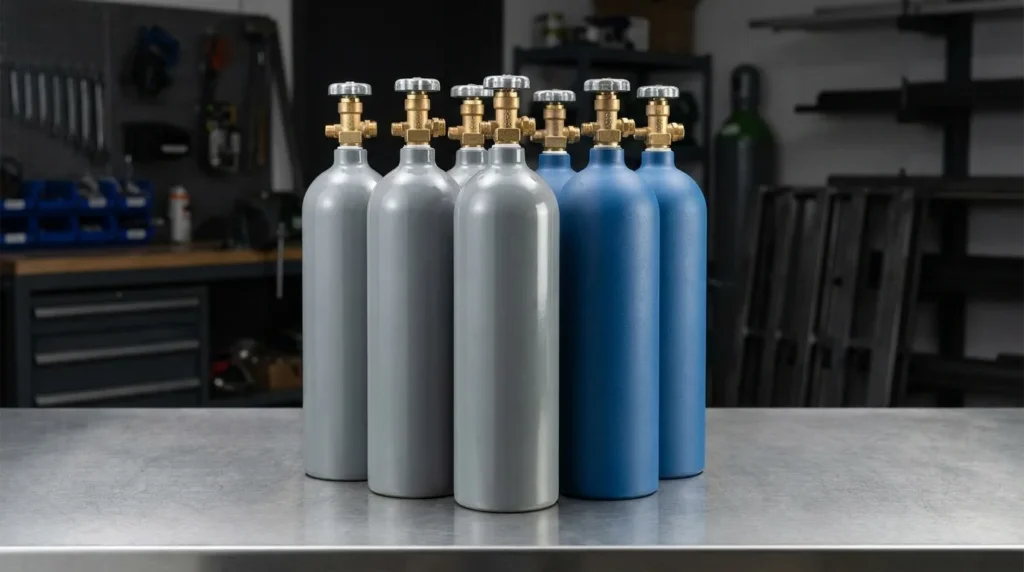
- Step up to a refillable trade bottle once you’re welding regularly. Larger cylinders such as the 20L and 50L argon-CO₂ trade mixes work out far better value per litre of gas for steady, higher-volume work. See the full trade welding gas range.
The catch with bigger bottles is usually the rental trap — a monthly standing charge whether you weld or not. Adams Gas does it differently.
Rent-free cylinders — pay for gas, not for holding the bottle
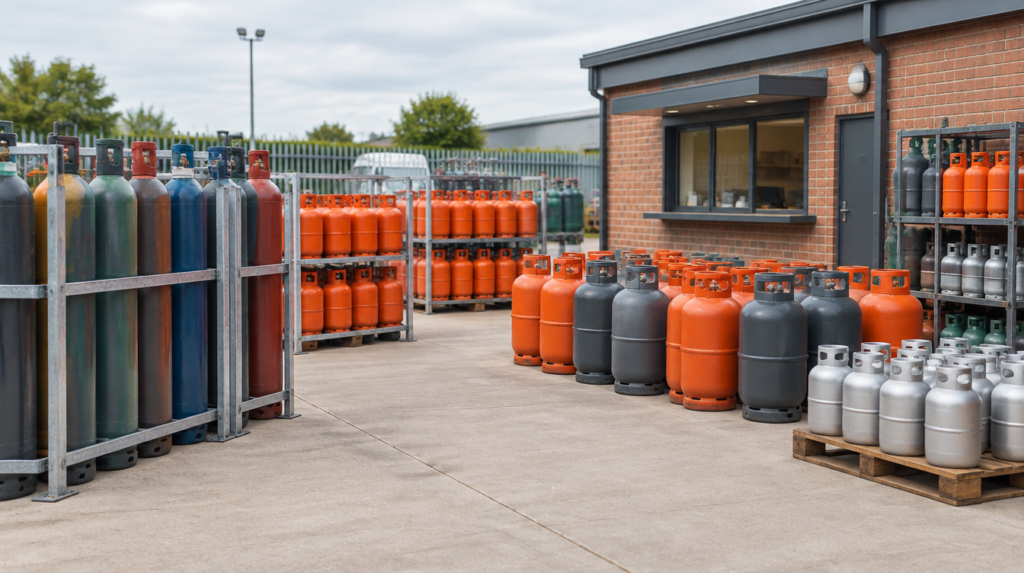
Plenty of welders are locked into cylinder rental agreements that quietly cost them all year round. Adams Gas offers rent-free cylinder options so you pay for the gas — not a standing charge for keeping the bottle in the corner. Combined with UK delivery and a nationwide stockist network, that means a refill or exchange is rarely far away, whether you run a single workbench or several sites. We’re also an established welding gas supplier across Kent and beyond.
Welding safely with shielding gas
Whatever cylinder you choose, treat it with respect. Keep cylinders upright and secured, fit the correct regulator for the gas and thread, check hoses and connections for leaks before you start, and always weld in a well-ventilated space away from anything flammable. Follow the safety information supplied with each cylinder, and if a setup doesn’t look right, ask before you strike an arc. If your work also involves gas cutting or heating, our guide to oxy-propane as an acetylene alternative covers that side of the workshop.
Get set up with Adams Gas
Whether you need a single compact disposable or a rent-free trade bottle, Adams Gas has the welding gas to match — argon, argon-CO₂ and CO₂, in the right size, with the regulator to suit. Browse MIG welding gas, find your nearest stockist, or contact the team for advice on the right setup. Run a trade counter or hire shop? You can become an Adams Gas stockist and supply welding gas to your own customers.
Frequently asked questions
What gas do I need for MIG welding steel?
For MIG welding mild and carbon steel, an argon-CO₂ mix is the go-to choice — it gives a stable arc, a clean bead and low spatter. Pure CO₂ is a lower-cost alternative with deeper penetration, well suited to thicker steel, though it produces more spatter. For TIG welding or MIG on aluminium you need pure argon instead.
Are disposable welding gas cylinders worth it?
For occasional, mobile or light welding, yes — a disposable cylinder means no rental, no deposit and no contract, so you only pay when you need gas. If you weld regularly, a refillable trade bottle works out better value per litre of gas; with Adams Gas’s rent-free options you get that value without a monthly standing charge.
What size disposable welding gas cylinder should I buy?
Adams Gas offers disposable welding gas cylinders in 0.95L (compact and portable, ideal for occasional jobs) and 2.2L (around 220 litres of gas, for longer sessions with fewer changeovers). Both use the standard M10 × 1 RH thread. How long each lasts depends on your gas flow rate and how much you weld.
Can I use pure CO₂ instead of an argon mix for MIG welding?
Yes — pure CO₂ works for MIG welding steel and costs less, with deeper penetration that suits thicker sections. The trade-off is more spatter and a slightly harsher arc than an argon-CO₂ mix, so for the cleanest finish on general steelwork most welders prefer the mix.
Do I need a special regulator for a disposable welding gas cylinder?
Yes. Disposable welding gas cylinders from Adams Gas use an M10 × 1 RH thread and need a matching disposable regulator to control the gas flow. You’ll find the right regulators and fittings in our MIG welding regulators range.
Ready to weld? Compare disposable welding gas cylinders, step up to rent-free trade bottles, find your nearest stockist, or contact the Adams Gas team.