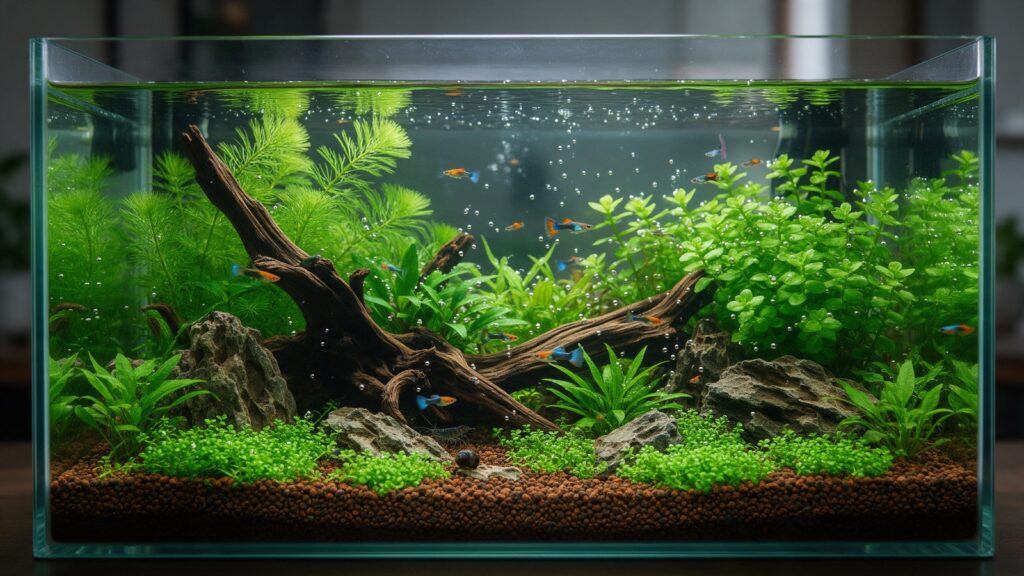
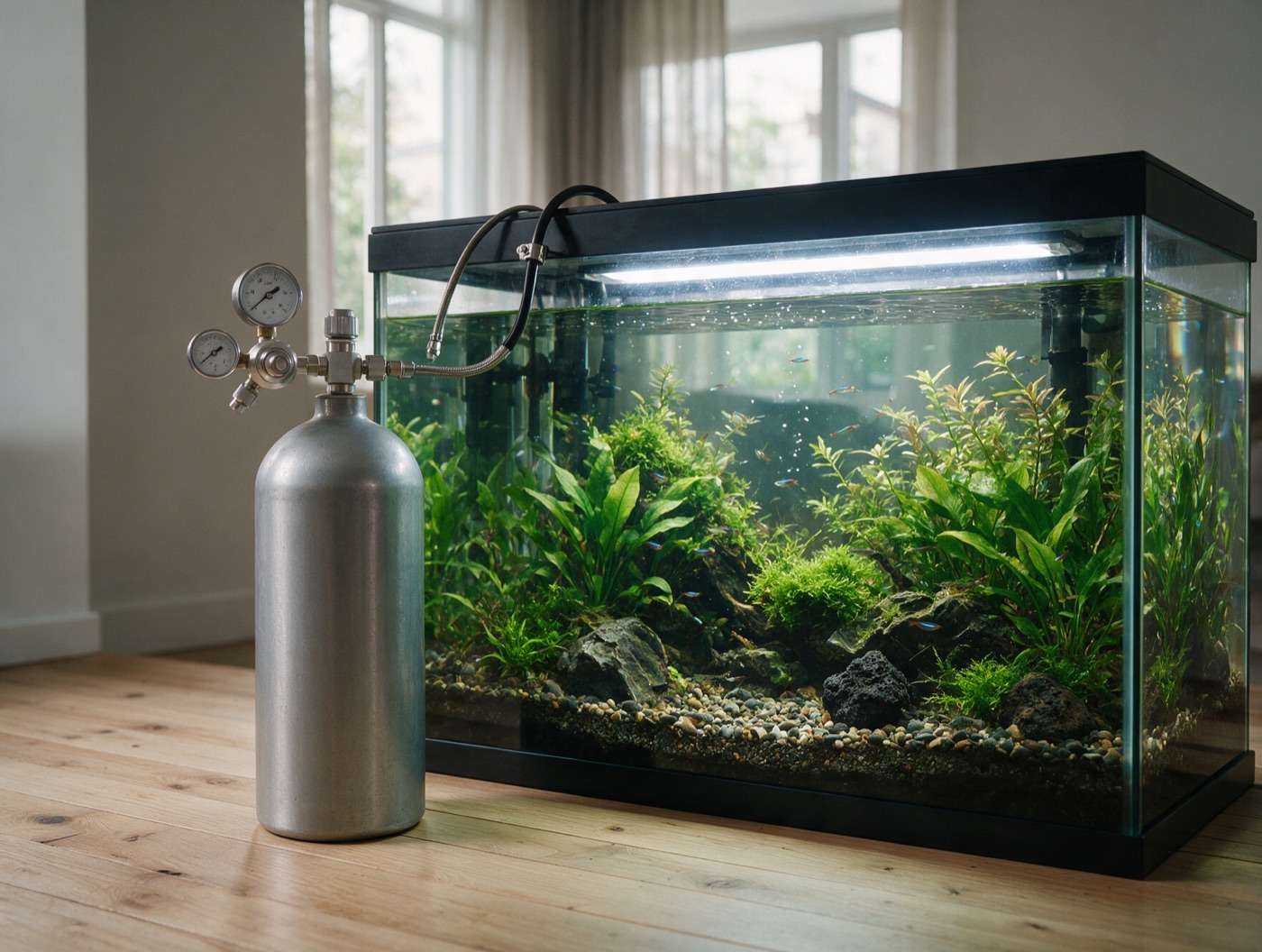
A pressurised CO₂ cylinder is the single biggest upgrade most planted-tank keepers make. Carbon dioxide is usually the nutrient aquarium plants run short of first, so a steady, controllable supply is what turns patchy, struggling growth into a dense, healthy aquascape. The theory is simple enough. The part that trips people up is the hardware: which cylinder size to choose, how long it will actually last, and how to keep it topped up without paying ongoing rental.
This guide covers all three, using the food-grade, rent-free CO₂ cylinders Adams Gas fills and supplies across the UK.
Why planted aquariums benefit from added CO₂
In a bright, well-fertilised tank, plants pull dissolved carbon dioxide out of the water faster than the surface can replace it. Once the water runs low on CO₂, growth slows and the balance tips in favour of algae. Adding CO₂ from a pressurised cylinder keeps that supply steady, which is why heavily planted and aquascaped tanks almost always run one.
A cylinder-and-regulator setup gives you far more control than liquid carbon supplements or aerosol kits. You set a consistent rate, the plants get a reliable supply, and you only need to think about it again when the cylinder is due for a refill.
Which CO₂ cylinder size do you need?
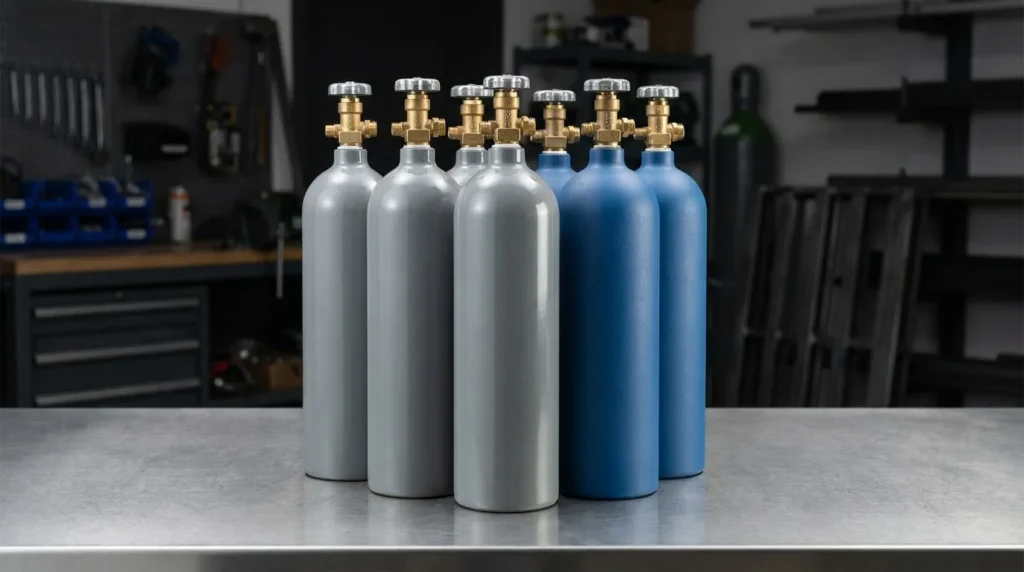
Adams Gas supplies food-grade CO₂ in a range that suits everything from a nano planted tank to an aquatic shop running several display aquariums:
| Cylinder | Typical use |
|---|---|
| 420g | Nano and small tanks, or a handy spare |
| 1.5kg | A single planted tank; a common home choice |
| 3.15kg | Larger display tanks, or longer run time between refills |
| 6.35kg | Big tanks, several tanks, or setups you would rather refill rarely |
For aquatic retailers, or anyone running a bank of tanks, larger 15kg and 34kg food-grade cylinders are available in the wider hydroponics and aquatic range.
As a rule of thumb, a bigger cylinder costs less per use and goes longer between refills, so if you have the space it is usually worth sizing up. Run time itself depends on your own setup, which is covered next.
How long does an aquarium CO₂ cylinder last?
The honest answer is that it depends on your tank size, your chosen rate, your regulator, and how many hours a day you dose. Two tanks on the same cylinder size can run very different lengths of time. Because of that, treat any single figure online with caution and judge your own run time over the first few refills.
Two practical points help:
- A larger cylinder is the simplest way to refill less often. If you keep running out mid-week, step up a size rather than redosing harder.
- Watch for the signs a cylinder is running low so you are never caught out. Our guide on how to tell if your gas cylinder is almost empty explains what to look for, and keeping a spare 420g cylinder is cheap insurance for a larger display tank.
Rent-free refills, not rental
Some CO₂ cylinders come with an ongoing rental charge that rolls on whether you use the gas or not. Adams Gas cylinders are rent-free: you own the cylinder outright and pay only for the gas inside it. When it runs low, you refill it rather than buying a whole new unit.
Refills are available through the Adams Gas nationwide stockist network or direct, and the gas is UK-filled food grade. For a planted tank that sips CO₂ for months at a time, owning the cylinder and refilling locally is the straightforward, low-admin option.
Why food grade matters for aquariums
The CO₂ going into water your fish and shrimp live in should be food grade, and all the aquarium CO₂ Adams Gas supplies is. Food-grade filling is the right standard for anything in contact with a living aquatic system, so it is worth checking on any cylinder, not only ours.
Setting up safely
CO₂ changes the chemistry of your tank, so introduce it gradually and keep an eye on your fish while you dial in a rate. A few general principles apply to any pressurised setup:
- Follow the guidance that comes with your regulator and diffuser for rates and pressures. Treat the equipment maker’s instructions as the authority, not a figure from a forum.
- A drop checker gives you a simple visual guide to the level in the water.
- Many keepers reduce or switch off CO₂ overnight, when plants are not using it. Check what suits your own setup.
- Store and change cylinders in a ventilated space. CO₂ is heavier than air and can gather in an enclosed, low spot.
If in doubt, go slowly. It is easier to raise a rate gradually than to recover a tank that has been overdosed.
For aquatic retailers: become a stockist
If you run an aquatic shop, aquascaping studio or garden centre, rent-free refillable CO₂ is something your customers already ask for. Becoming an Adams Gas stockist lets you offer food-grade refills locally, backed by a UK supply chain, without the rental baggage that puts customers off. You can apply to become a stockist here.
Where to buy and refill
Browse the full aquarium CO₂ cylinder range, including the 420g nano cylinder, the 1.5kg cylinder for a single planted tank, and the longer-running 6.35kg cylinder. To refill an empty cylinder, find your nearest stockist, or contact Adams Gas and the team will point you to the right size and your closest refill point.
Frequently asked questions
What size CO₂ cylinder do I need for a planted aquarium?
For a single home planted tank, a 1.5kg cylinder is a common choice. A 420g cylinder suits nano tanks or a spare, while 3.15kg and 6.35kg cylinders suit larger display tanks, several tanks, or anyone who would rather refill rarely. Larger 15kg and 34kg cylinders are available for retailers and multi-tank setups.
How long does an aquarium CO₂ cylinder last?
It depends on your tank size, your dosing rate, your regulator and how many hours a day you run CO₂, so run time varies a lot between setups. A larger cylinder is the simplest way to refill less often. Watch for the signs a cylinder is running low rather than relying on a fixed figure.
Can I refill my aquarium CO₂ cylinder instead of buying a new one?
Yes. Adams Gas cylinders are rent-free and refillable, so you own the cylinder and pay only for the gas. Refill through the nationwide stockist network or direct with Adams Gas. The gas is UK-filled and food grade.
Is the CO₂ safe for fish and shrimp?
The CO₂ Adams Gas supplies for aquariums is food grade, which is the right standard for a living aquatic system. Introduce CO₂ gradually, follow your regulator and diffuser maker’s guidance, and keep an eye on your livestock while you set the rate.
Where can I refill aquarium CO₂ near me?
Adams Gas has a nationwide stockist network. Use the stockist finder to locate your nearest refill point, or contact Adams Gas directly and the team will help you find the right size and location.